Hey y'all,
Someone submitted a set of journals without a name on it. If one of your entries was entitled "Women are the Neck," please e-mail me or the prof ASAP.
Thanks,
Casey

Saturday, 10 November 2012

Recreational Use of Marijuana: 1950s vs 2010s
In conference last Friday, one of the artifacts presented dealt with the theme of the use of marijuana for recreational purposes in the United States in the 1950s. The discussion ended on a question: do people still frown upon the use of marijuana the way they did back in the day?
I would argue that even though its use for recreational purposes is not legal in most states, it is still more widely accepted. Surprisingly enough, it appears that many people are at peace with using it illegally. Indeed, my main argument to support this statement would be because it is, in my opinion, overexposed in politics and pop culture.
My first "exhibit" would have to be photographs of a young Barack Obama enjoying some weed. These photographs are widely accesible on the internet, and numerous.
My second one would be a stills from videos taken by fans of Lady Gaga, smoking on scene with her dancers during her latest tour. Of course, the act took place in Amsterdam, yet led to her public support of legalizing its use overseas.
My final one would be this article, which explains how Denver recently managed to legalize the use of marijuana in Colorado. http://www.denverpost.com/breakingnews/ci_21941918/nation-watches-colorados-marijuana-legalization-vote
So what do you guys think??

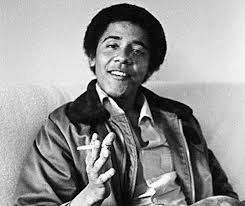

I would argue that even though its use for recreational purposes is not legal in most states, it is still more widely accepted. Surprisingly enough, it appears that many people are at peace with using it illegally. Indeed, my main argument to support this statement would be because it is, in my opinion, overexposed in politics and pop culture.
My first "exhibit" would have to be photographs of a young Barack Obama enjoying some weed. These photographs are widely accesible on the internet, and numerous.
My second one would be a stills from videos taken by fans of Lady Gaga, smoking on scene with her dancers during her latest tour. Of course, the act took place in Amsterdam, yet led to her public support of legalizing its use overseas.
My final one would be this article, which explains how Denver recently managed to legalize the use of marijuana in Colorado. http://www.denverpost.com/breakingnews/ci_21941918/nation-watches-colorados-marijuana-legalization-vote
So what do you guys think??
Gory Remakes
We briefly mentioned this in conference... but has anyone else noticed that most of the time remakes are much gorier than the originals? Why is that?
Similar to remakes of Invasion of the Body Snatchers and The Thing, there have been several remakes of The Twilight Zone (including a movie that is a collection of a number of classic episodes). What all of these remakes seem to have in common is the monsters are creepier/gorier than the originals.
Take Nightmare at 20,000 Feet
Original:
 1983 Remake:
 Invasion of the Body Snatchers
Original:
 1978 Remake:

Similar to remakes of Invasion of the Body Snatchers and The Thing, there have been several remakes of The Twilight Zone (including a movie that is a collection of a number of classic episodes). What all of these remakes seem to have in common is the monsters are creepier/gorier than the originals.
Take Nightmare at 20,000 Feet
Original:

Original:

I understand that some of the violence may have to do with the advancements in special effects, but still... is gore really what makes these films and shows entertaining/scary?
Friday, 9 November 2012
Disney Reason and Emotion (1943)
Interesting animated educational video I found about reason and emotion. Relates to the Artifact presented in conference today about controlling your emotions. I found it amusing how it tries to explain the power interplay between the two in a cartoon. Does anyone have any thoughts about this? Very amusing so I highly recommend watching it!
Thursday, 8 November 2012
The Future: The Jetsons & The Green Jelly Fridge
Today in conference (2:30-3:30), we talked about the different ways
technology is "taking over" and what the future could possibly look like as we're constantly getting closer to the "futuristic era". As a result of this discussion, the Jetson's was brought up. I wanted to share the intro of the show with a comparison to the parodied version as seen on Family Guy. Family Guy mocks the show's intro where the wife is seen taking money from her husband. The Jetson's first aired in 1962 - depicting 2064... not exactly far into the distant future...!
I brought up the Green Jelly Fridge in class today during Simon's
kitchens of the future artifact presentation, as I constantly stumble
upon this image when I'm on Pinterest (really fellow Pinteresters?!?)
and I couldn't help but to make the connection. I posted the image and
two links that explain the background of it's conception and it's
functions. Imagine this as the future of our fridges? So creepy!

http://dvice.com/archives/2010/06/in-the-future-r.php
http://www.myfoodu.com/tag/fridge
The Themes of The Twilight Zone
While I was writing my journals for The Twilight Zone I came across a pretty interesting analysis of the main themes of the show which could prove to be pretty useful for our discussion next week. I think the most important one is that of post-war American suburban nightmares which is really explored in The Monsters are Due on Maple Street.
Wednesday, 7 November 2012
The Stepford Wives opening sequence
I was watching this a few days ago and i just found the opening sequence very interesting. The music makes the women in these ads seem almost demonic. ANy thoughts?
http://www.youtube.com/watch?v=yoE1VVy2sSs
http://www.youtube.com/watch?v=yoE1VVy2sSs
Artifact! The Beats and counter culture
For my artifact I chose Part II of the poem Howl by Allen Ginsberg.
www.poets.org/viewmedia.php/prmMID/15308
I thought that Invasion of the Body Snatchers and its comment on conformism was very interesting as, despite the hysteria of McCarthyism and the Red Scare, the film was still able to critically assess that culture. Even though it was created in the Hollywood context that had recently persecuted 10 members for alleged communist ties and despite the production code dominating what was considered appropriate content, it was able through the genre to criticize the historical context.
I was reminded of the article by Reisman and his theory on "other" and "inner" directed people and how the film obviously relies on the inner directed man to make decisions .
I chose Howl because it is part of the counter culture of the 50's and the more explicit criticism of societal conventions of the 50's. As well as criticizing the government structure and religion, a major theme the poem addresses is freedom versus confinement and the indoctrination of the population into societal and cultural expectations of conformism.
Some quotations that I'll be examining in conference and that are important to consider are:
"Moloch whose mind is pure machinery! Moloch whose blood is running
Some questions to consider are the parallels between the ideas of the Beat poets in comparison to the other major form of counter culture which was the teenage delinquency culture that we talked about in Rebel Without a Cause.
Another broader question is to look at the critiques that Ginsberg makes and consider how we can use these to look critically at 50's culture within the same 50's context.
It is also useful to think about how the critiques of culture within Invasions is similar or different to Ginsberg.
www.poets.org/viewmedia.php/prmMID/15308
I thought that Invasion of the Body Snatchers and its comment on conformism was very interesting as, despite the hysteria of McCarthyism and the Red Scare, the film was still able to critically assess that culture. Even though it was created in the Hollywood context that had recently persecuted 10 members for alleged communist ties and despite the production code dominating what was considered appropriate content, it was able through the genre to criticize the historical context.
I was reminded of the article by Reisman and his theory on "other" and "inner" directed people and how the film obviously relies on the inner directed man to make decisions .
I chose Howl because it is part of the counter culture of the 50's and the more explicit criticism of societal conventions of the 50's. As well as criticizing the government structure and religion, a major theme the poem addresses is freedom versus confinement and the indoctrination of the population into societal and cultural expectations of conformism.
Some quotations that I'll be examining in conference and that are important to consider are:
"Moloch whose mind is pure machinery! Moloch whose blood is running
  money! Moloch whose fingers are ten armies! Moloch whose breast
  is a cannibal dynamo!  Moloch whose ear is a smoking tomb!"
"Moloch whose love is endless oil and stone! Moloch whose soul is electricity
  and banks! Moloch whose poverty is the specter of genius! Moloch
  whose fate is a cloud of sexless hydrogen! Moloch whose name is the
  Mind!"
"They broke their backs lifting Moloch to Heaven! Pavements, trees, radios,
  tons! lifting the city to Heaven which exists and is everywhere about us!
Visions! omens! hallucinations! miracles! ecstasies! gone down the American
  river! "
Some questions to consider are the parallels between the ideas of the Beat poets in comparison to the other major form of counter culture which was the teenage delinquency culture that we talked about in Rebel Without a Cause.
Another broader question is to look at the critiques that Ginsberg makes and consider how we can use these to look critically at 50's culture within the same 50's context.
It is also useful to think about how the critiques of culture within Invasions is similar or different to Ginsberg.
Thomas Peterffy - Freedom To Succeed (More on the 2012 Election)
As I was watching the election last night, I could not get over the fact that this ad played:
What you just watched was an anti-socialist ad in 2012. Not only do I have a problem with the fact that Peterffy is a billionaire who funded this ad on his own, the Democratic party is still far from socialist, and using post-war, Soviet-occupied, authoritarian Hungary as the socialist example is a totally unfair depiction of a successfully socialized country, it is also so bizarre to me that the legacy of the 1950's fear of any government that strays from a capitalist democracy lives on. It's funny to hear this revival of celebrating the American Dream after it has been so thoroughly criticized, at least in our generation.
The whole thing got me thinking about how many people still have political opinions that stem from the fears of the 1950s/60s---Romney considers Russia America's biggest international threat, rejection of free or cheaper social services because we're going to become --god forbid!-- socialist, being offended by the word "vagina", Americans still can't go to or trade with Cuba, and, in general, very family-based politics.
I personally believe that, while American politics are not static, certain and necessary change is hindered by outdated ideas.
Why have 50s/60s politics had such a legacy in America? Is this a good or a bad thing?
Tuesday, 6 November 2012
The 50s and the election
Couldn't help but notice the hilarious title of The New Yorker's article about our by-default favorite politician south of the border!
"Obamas Return to the White House as Romneys return to 1954"
http://www.newyorker.com/online/blogs/borowitzreport/2012/11/obamas-return-to-white-house-as-romneys-return-to-1954.html
What do you guys think of this characterization of the Romneys (and the 50s)? Who should be insulted?
"Obamas Return to the White House as Romneys return to 1954"
http://www.newyorker.com/online/blogs/borowitzreport/2012/11/obamas-return-to-white-house-as-romneys-return-to-1954.html
What do you guys think of this characterization of the Romneys (and the 50s)? Who should be insulted?
Artifact: Control Your Emotions
I came across this educational
video from the 1950's, Control Your Emotions, that attempts to explain how emotions can be controlled
and understood. These videos immediately triggered ideas of what our discussion
on Monday lecture as they correlate to the subjugation of emotions seen in Invasion of the Body Snatchers.
The video, Control Your Emotions, discusses the
three ranges of emotions (fear, rage, love). In my view, it is an inaccurate
video of the escalating effects that emotions can cause. Emotions are referred
to as a “contagious disease”, and as long as they are controlled, “one is more
pleasant, and those around you are happier and healthier.”
During the 1950’s there was a widespread fear of
communist conformist ideals, which allowed Invasion of the Body
Snatchers to create such dread and terror into its audience as it projected
these fears coming to life. However, this educational videos is in contrast
with the anti-conformist feelings of the time period. It is a genuine
instructional videos attempting to educate individuals on how to conform.
Personally, I find these instructional videos more disturbing and frightening
than Invasion of the Body Snatchers.
My questions to you are:
Do you find that these
educational videos contrast the search for individuality that was apparently
important during this time period?
How do you think the public
perceived this educational videos? Could it have created a similar sense
of fear that was present in Invasion of the Body Snatchers?
See you on Friday!
See you on Friday!
#OBAMA2012
In light of the elections...
http://www.cbsnews.com/8301-503544_162-57489499-503544/obama-romney-wants-to-take-womens-health-care-back-to-the-1950s/
http://www.cbsnews.com/8301-503544_162-57489499-503544/obama-romney-wants-to-take-womens-health-care-back-to-the-1950s/
Artifact presentation: Women defend the nation?
I'm going to do my artifact presentation on Federal Civil Defence Administration posters, specifically the ones that call women to defend the nation.
 |
| These are some of the Civil Defence jobs open to men and women. |
 |
| The FCDA used comforting images of traditional domesticity in its campaign for bomb shelters. This is one of the more famous ones.
"Grandma's pantry" along with "Duck and Cover," which we watched in class, were two of the most prominent FCDA campaigns, and both emphasize the importance of women’s participation in civil defense during the Cold War in interesting ways.
Television in the 1950s used to air programs to instruct housewives how to prepare their family for an attack, including lessons about first aid, storing food and equipment, fighting fires, and locating an ideal family shelter. I think it's important to zero in on the gender specific roles implied by the ideas these short films and posters evoke.
Some questions to think about.. Why were gender roles solidified in such a binary format in the first poster? How did "Duck and Cover" emphasize the importance of women in defending the Nation? Why was the use of cartoons and short films so popular with this kind of propaganda? Do women still embody traditional family values, and the traditional role of 'homemaker' to the same extent in the media today? |
America’s scariest book? Artifact: Red Channels
Look! You fools! You’re in danger! Can’t you see? They’re after you! They’re after all of us! Our wives…our children…they’re here already! You’re next! — Dr. Miles Bennell

Red Channels: The Report of Communist Influence in Radio and Television was an anti-Communist tract issued by the American right-wing journal Counterattack. Its publication at the height of McCarthyism, coincided with the release of Invasion of the Body Snatchers, prompting the temptation to view the sci-fi film as a metaphor for the tyranny of the McCarthy era.
The pamphlet-style book, issued on June 22, 1950, listed 151 actors, directors, writers, musicians, journalists, broadcast personalities and others in the context of purported Communist manipulation of the entertainment industry. The House Un-American Activities Committee was rapidly decimating Hollywood and Red Channels essentially placed all 151 on the industry blacklist, where Senator McCarthy had individuals sign a pod-like oath the prove they were 'good' Americans and not Communist subversives. Just like the uniformity of the 'Body Snatchers', a chilling pod-like conformity reigned over Hollywood.
With an uncanny likening to Mein Kampf, Red Channels depicted McCarthy ideology, alerting the everyman to the paranoia of a friend or neighbour revealing themselves as an undercover Cold-War spy whose hidden agenda was a Soviet Takeover of America. The 'pod-people' in Invasion of the Body Snatchers, like Senator McCarthy and other red-baiters, resemble typical upstanding Americans, who stalk rebels like Miles and Becky that refuse to conform to what has been newly defined as the 'American Way', just as McCarthy and HUAC were libeling the reputations of those who refused to succumb to their directives. And just like the coming of the 'pod-people', Red Channels arrived quietly and discretely, no headlines, no television coverage.
Without making any blatant, potentially libelous accusations, Red Channels identified an invisible 'public threat' since Red Fascists and their sympathisers had infiltrated and exploited radio and television through pro-Soviet rallies, meetings and conferences.

Invasion of the Body Snatchers aptly allegorises the American perception of the Soviets, their 'invisible enemy', who were considered ice cold, outwardly peaceful but very authoritarian and emotionless. Many Americans even considered Russians a different species who, because of their disbelief in God, were soulless and wanted to destroy Americans or turn them into Communist clones. McCarthyites employed conservatism to battle the evils they felt were destroying America. The film’s 'invisible enemies' and the public’s view of Communists presents limitless parallels, acutely capturing post-war, anti-communist paranoia.
Thought-provoking questions:
- In today's American culture, do you think Red Channels would be viewed as ultraconservative propaganda that could only incite small groups of nationalists or dangerous propaganda that could once again incite mass hysteria into our nation?
- Russian communism was perceived as cosmic, intergalactic and ambitious. Is Director Don Siegel employing anti-Communist rhetoric to depict a resemblance between the 'pod-people' and the class enemy or is he commenting on the loss of humanity and sensitivity as a result of the atrocities of recent wars?
- Some people have viewed Invasion of the Body Snatchers as a sympathetic allegory for the loss of personal autonomy in the Soviet Union or Communist systems in general, did you perceive this when watching the film?
See you on Thursday for further discussion!
Monday, 5 November 2012
'Coming Out in the 50's' short film.
Coming Out in the 50's
I saw this at the "Image+Nation" queer film festival last year and in a series of shorts. It's basically three high school students interviewing elderly members of the queer community, discussing their coming out experience in 1950s America.
It definitely looks cheesy, but the content of the interviews is really interesting. They discuss the era and the reign of terror under McCarthyism, they also discuss cruising and courtship and the norms of desirability of the time.
Enjoy!
Artifact: How Television Benefits Children
There are so many aspects of
1950s culture that have been radically redefined in contemporary society. Two
things that really stand out to me are the complete change in perception
surrounding television and it’s effects on children, and the huge shift in advertising
strategies.

If you want to zoom in to read the advertisement you can click on this link How Television Benefits Children
This advertisement by Motorola
Television illustrates how TV was considered to be beneficial to children in
the 1950s. According to the ad, television “brings parents and children
together”, "keeps small fry out of mischief” and ensures that children get
their homework done promptly, because everyone knows the simple rule: “homework
first and television second actually makes children more interested in school
work!”
What sticks out to me from this
ad is the way that the advertisers support their claim that television is
beneficial to children by providing quotes from educators, religious officials
and medical professionals. They
are clearly trying to appeal to the morality of 1950s families and their desire
for a virtuous lifestyle. Today, it would be very rare to see an advertisement
for technology that uses morality as a rhetorical device. Instead, advertisers
propose that their technology is bigger and better than anything before.
I also
found it interesting that the contemporary discourse around television’s effect
on children is completely different than what is presented in this ad. The
Motorola advertisement presents television as a means to keep children out of
trouble, make them stay on top of their homework and establish a closer bond with their family. Today, television is perceived to do the exact opposite. The excessive
violence that is shown on TV is said to desensitize children, and in some cases
cause them to act in a cruel and barbaric manner. Moreover, TV is claimed to
distract children and isolate them from others.
How do you think this advertisement appeals to the values
and ideals of the 1950s family?
How can we compare this advertisement to contemporary ads for technology? Are there any similarities? What are the major
differences?
What do you think has caused the shift in perception
surrounding television and it’s effects on children?
See you Friday!
Artifact: Science fiction and Anti-communism
Science and speculative fiction have long been used as cautionary tales. A common theme is that if you take certain things for granted, you will be punished. In Invasion of the Body Snatchers, appearance is taken for granted but actually hides a threat to the fabric of American society. It is also seen in Armed Forces Information Film (AFIF) 120: Red Nightmare. Here the main character, Jerry Donovan, a man living in small town America, takes his free will for granted and gets punished.
Red Nightmare is not exactly a science fiction film, but falls into the broader genre of speculative fiction. The film begins with a dystopian mise-en-scène: barbed wire surrounds a typical American town, soldiers in Soviet uniforms patrol the streets, and Russian has replaced English as the common tongue. This distinct, strong imagery serves to shock the audience into believing what they're seeing is real. (According to Jack Webb, the film’s celebrity narrator, the Soviet Union built American towns for training their spies). The film prompts the audience to act accordingly as responsible American citizens, which brings me to this clip that I found on how to be an American citizen.
This clip stars a “professor” who is educating young adults (a.k.a. the future of America) on the responsibilities of American citizenship. He emphasizes that youths should know their enemies, define their heritage, and take responsibility. Of course, you can probably see a strong resemblance between his classroom and the communist gatherings we see as examples..
His alleged professorship seems to be enough for people to believe him and his teachings. This is inline with the anti-communist sentiments explored in Invasion and Red Nightmare; people are afraid of totalitarianism and McCarthyism, but they still subject themselves to authoritative figures. Similar to Donovan in Red Nightmare, when he is convicted for his crime, he isn’t given a lawyer to defend him. There were no questions asked, no free thought, merely a harsh and unfair conviction. Or in Invasion, little Jimmy never questions why he’s being given drugs, nor did his grandmother care to know what medication her grandson is taking. But because Miles is a doctor, a well-respected authority figure, people trust him.
This kind of reminds me of doctors endorsing cigarettes:

Red Nightmare is not exactly a science fiction film, but falls into the broader genre of speculative fiction. The film begins with a dystopian mise-en-scène: barbed wire surrounds a typical American town, soldiers in Soviet uniforms patrol the streets, and Russian has replaced English as the common tongue. This distinct, strong imagery serves to shock the audience into believing what they're seeing is real. (According to Jack Webb, the film’s celebrity narrator, the Soviet Union built American towns for training their spies). The film prompts the audience to act accordingly as responsible American citizens, which brings me to this clip that I found on how to be an American citizen.
His alleged professorship seems to be enough for people to believe him and his teachings. This is inline with the anti-communist sentiments explored in Invasion and Red Nightmare; people are afraid of totalitarianism and McCarthyism, but they still subject themselves to authoritative figures. Similar to Donovan in Red Nightmare, when he is convicted for his crime, he isn’t given a lawyer to defend him. There were no questions asked, no free thought, merely a harsh and unfair conviction. Or in Invasion, little Jimmy never questions why he’s being given drugs, nor did his grandmother care to know what medication her grandson is taking. But because Miles is a doctor, a well-respected authority figure, people trust him.
This kind of reminds me of doctors endorsing cigarettes:

Children were “trained” at a young age to be responsible American citizens. A popular toy for boys was the “atomic energy kit”, a science kit containing real samples of radioactive material. With the race of technological advancement against Soviet Union, and the ever-present fear of the Bomb, children were exposed to games that encouraged them to be the future scientists of America. The subtext here is that science and technological progress best served the advancement of America’s national defense.
However, it kind of feels like with these games, there is more of a responsibility to pry into your neighbours’ lives. The lack of privacy comes into play because there is a heightened sense of danger. Privacy was constantly intruded on in Invasions, and is completely absent under the speculative Soviet United States of America of Red Nightmare.
Here I have a couple of questions:
- Why was Donovan's trial portrayed as a nightmare? Because dream is not real, although conveys a sense that what may be, why is Donovan given a second chance? Red Nightmare was released the same year as the Cuban missile crisis, could the dream resolution be seen as reluctance to accept the reality of a potential Soviet invasion?
- Are science fiction films used as anti-communist propaganda because of the objective nature of science can convince or rather scare the audience into believing the dystopian world that they portray?
Artifact Assignment: Anti-Marijuana Propaganda in the 1950s

Public sentiment towards marijuana and its recreational use has undergone a huge evolution which still influences the way we, as a society, perceive drug use in general. I chose, for my artifact, a public service announcement from 1951 entitled The Terrible Truth About Marijuana. This PSA explains the devastating degradation of America's youth through the widespread use of "pot" ("that's jive speak for marijuana") This is done by telling the story of a former marijuana addict who ended up married to a drug dealer, addicted to heroin, and jailed for drug dealing.
This PSA really demonstrates itself to be building on propaganda dating back to the 1920s and 1930s, in which marijuana was deemed as something done by Mexican immigrants, and therefore represented a "lowly culture" and criminal behaviour. This is also evident in the 1930s with the infamous propaganda film Reefer Madness in which the high received from marijuana made the user frantic and psychotic leading to very violent behaviour, resulting in rape and murder. In this ad, this same idea is elucidated as Phyllis describes the high as feeling like you're going a "hundred miles a minute". Also, the idea of its extremely addictive nature remains a vestige from the 1930s, claiming marijuana to be the most addictive drug in the world, linking it to heroin use.

It wouldn't be the 50s without some Red Scare fear mongering as the narrator suggests that marijuana is being proliferated in America by the "reds" to make a docile culture which will be easy to invade. His proof is the Soviets did this to China by spreading Opium, though the British kind of did that in the late 1800s.
Here is another example of some 1950s anti-marijuana propaganda echoing the same message as the PSA in the teen film High School Confidential (1958)
And now a question for you, do you believe that this strong anti-marijuana/drug culture built up from the 1920s to 1950s still resonates today? Specifically, is marijuana use seen as something detrimental to society today? Is this belief of marijuana addiction still relevant considering the overwhelming amount of American youth being sent to rehab for marijuana use? Is this PSA just another ridiculous out-dated vestige of the past or does it still somewhat speak to the society we live in, also considering the large amounts of Americans jailed for relatively small marijuana related crimes in the War on Drugs?
EDIT: slightly irrelevant but still pretty funny, a look into Obama's marijuana use
How times have changed? Artifact: the future of the kitchen
Two clips of the "future kitchen", one from 1956, and one from present day, notice any particular similarities between the two? Still a male voice describing the actions of a woman going about her business in the kitchen, still an attractive well dressed woman doing the button pressing and kitchen work. Beyond that, and as we enter the realm of science-fiction with "The Twilight Zone" this week, the futuristic features expected of our "modern" kitchens in the 1950s still look quite similar to our expectations for those 5 years from now.
A couple from 1956 (feel free to skip along if you find the high pitched music absolutely unbearable):
2010:
I also ran into this video on my search for the 1950s vision of the future and thought it was a great portrayal of 1950s values and methods:
A couple from 1956 (feel free to skip along if you find the high pitched music absolutely unbearable):
2010:
I also ran into this video on my search for the 1950s vision of the future and thought it was a great portrayal of 1950s values and methods:
ATTENTION: Issue with TV Journals
Hi all,
As Prof. Schantz and I were going through the journals today, we noticed that several of you wrote about episodes that we will be screening in class. The syllabus states that you are to chose 4 "additional" episodes, so anything that we have or will be viewing collectively is off limits. If you are one of these people, please select another episode and submit it to us as soon as possible (or take the 25% hit on the grade). Let me know if you have any questions.
Casey
[Update] It has recently come to my attention that the .pdf of the syllabus does not include the specific episodes of The Twilight Zone. Nonetheless, since they were listed on the hard copies, and you could have asked the the prof or myself, you will still need to redo them. For clarification, the episodes we will be screening this Friday are: "The Monsters are Due on Maple Street," "Where is Everybody?" "People are alike all Over," and "The Lateness of the Hour." Sorry for the confusion!
Hitchcock's Secret Obsessions
So I'm as excited as everyone else for the new film, "Hitchcock." I love the director and many of his movies are on my list of best films of all time. However I recently saw this HBO film on Hitchcock and was pretty disconcerted by the image of him that is projected. For one thing, he is obsessive in his filmmaking - he constantly puts the product above the well-being of his actors and actresses (though he treats the women particularly poorly). More shocking is his treatment of Tippi Hedren, the main actress in 'The Birds' - there are scenes in which she is genuinely put through psychological trauma in order to get the shot that Hitchcock wants (she apparently had to recover for a week during filming at the request of her physician). As well, much of her punishment seems to be rooted in her refusal to sleep with him (does this mean that all the main actresses in his other films actually did agree?). His adoration of her verges into obsession. A few things: Firstly, I have dealt with this dilemma before: I am a big fan of Wagner's operas, yet I'm aware that he was a rabid anti-semite; I like Bravheart but it seems like Mel Gibson is a pretty racist guy (not to mention anti-semitic as well); even Woody Allen has some questionable moral traits, but I love most of his films. Personally, I am generally able to avoid conflating the two - I have little admiration for Wagner as a human being, but it doesn't affect my admiration for his work at all. I now have far less respect for Hitchcock the man, but it hasn't seemed to affect my reception of his films. Perhaps it is a little naive for me to believe that I can entirely distinguish the two. So I guess my question is how much can we distinguish between art and the artist? There were a lot of questionable characters making excellent films in the 50's and I feel like it's an important question to consider both for that era and in art as a whole.
"The Duke in his Domain": Truman Capote on Marlon Brando, 1957
If anyone's interested in Marlon Brando or Truman Capote's writing, this is a great article from the New Yorker's archives. Capote does a beautiful job detailing such a prolific celebrity.
Sunday, 4 November 2012
Ellen's Sarcastic Take on the 1950s
On Ellen, season 5 episode 19 produces a sarcastic documentary style episode, with a "controversial" segment that is said to have aired in 1969; A time where "it was a different time; back then being a mother was considered dirty. You couldn't say the word 'pregnant'".
Of course she was exaggerating, yet when Lucille Ball's pregnancy was written in the "The Baby" episode in I Love Lucy, a priest, minister and rabbi had to approve of the scripts, and that it never used the word "pregnant".
If you're interested, watch minute 2:00 - 4:00 of the following video. You'll notice a striking resemblance to I Love Lucy . They even mention the chocolate conveyor belt, and imitate Ricky's laugh.
First couple minutes of the next video shows so many stereotypical ideas of the 50s through a game show, mocking communism, smoking etc.
Check it out if you're interested!
Yellowface and Modern Representations of Race
During the week we studied Gunsmoke, representations of race were brought up with respect to white actors playing Native American or Asian characters. In my conference in particular, we analyzed examples of Yellowface and Redface in 1950s Hollywood cinema. Recently on the blog, Lina mentioned Cloud Atlas in a post about representations of race and how the flexibility of a character's race in this film might be interpreted as progressive. An article recently published in the Huffington Post supports the opposite opinion and believes that the actors playing Korean characters in the film are performing Yellowface, and do not present an accurate representation of this race.
I want to know what you guys think of this piece and the author's interpretation of Yellowface in modern film. Personally, I think his argument is a bit all over the place, and he fails to mention that there are Korean actors (like Bae Doona) in the film who play Caucasian characters in other story lines. I think unfortunately he missed the point of the film which was to show the trajectory of a person's soul being reincarnated through various moments in time and space. However, it can be argued that the make up and prosthetics used to create a Korean profile on the white actors in the Neo Soul story line do share certain aspects with the tradition of Yellowface in Hollywood cinema.
Based on our discussions in conferences about representations of race, I'm curious to see what other people's opinions of this article and the author's interpretation of this film and the history of Yellowface.
How do the performances in Cloud Atlas relate to some of the examples of Yellowface we discussed in conference? Can we see similarities or has Hollywood progressed?
http://www.huffingtonpost.ca/alden-habacon/cloud-atlas-yellowface-diversity-racism-hollywood_b_2050368.html
Subscribe to:
Posts (Atom)